
Land Use
The Land Use Plan is important because it outlines what purposes a given area of land in our neighborhood can be used for, which really impacts the quality of our daily life. For example, looking around West Indy, you can see examples of residential use (our homes), community spaces (our parks), commercial (restaurants and stores), and industry (factories and trucking).
If we don’t use our land properly, we don’t have enough jobs, houses, services, etc to support neighborhood life.
To get a better understanding of what a Land Use Plan is, why it’s important, and how the process works, check out this series of short videos by the People’s Planning Academy (PPA) from Indianapolis Neighborhood Resource Center (INRC) and DMD.
The West Indy Land Use Plan is part of the City’s overall Comprehensive Plan for Indianapolis and Marion County. The Pattern Book gives explanations of different types of neighborhood uses. You can read the most current West Indy Land Use Plan (2011) here.
DMD’s draft of the Comprehensive Plan is expected in early 2024, and adoption is expected by the end of 2024.
Keep an eye out for opportunities to make your voice heard during this important process! If you would like to be on WINC’s Land Use Committee, please contact us at winc@westindy.org.
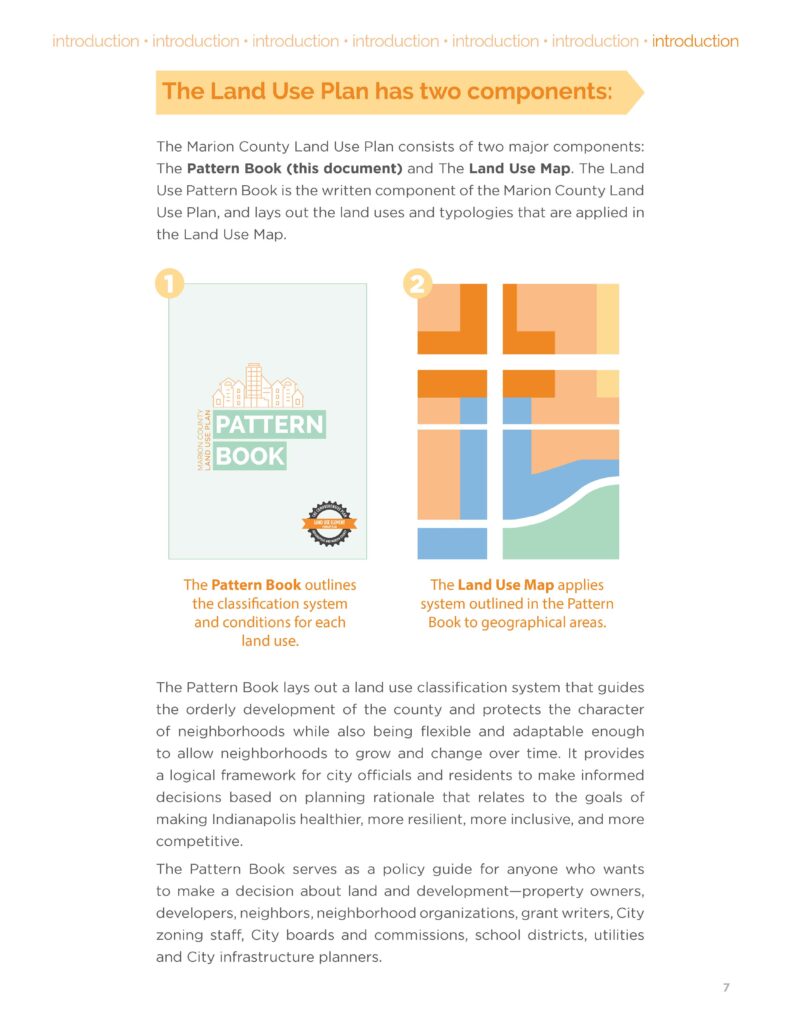
2019 version of Land Use Pattern Book
NEW LAND USE PLAN DRAFT OPEN FOR COMMENT
January 22, 2026
The draft plan for how the City plans to use West Indy land into the future is out. The plan knocks out a lot of homes in West Indy to add more industry. Purple on the map below (showing West Indy boundaries) indicates industry and yellow indicates residential housing. You can see what they have in mind when they say industrial below the map.
If you have something to say about this, or questions to ask, you have until February 3, 2026 to comment at this link. You can click directly on the page you want to comment on to post. You will be asked to create an account to comment.
We do not know how this land use plan affects the Downtown Regional Expansion, proposed to come all the way to Belmont and Morris. Department of Metropolitan Development representatives will be at WINC’s February meeting (Sat., Feb 14 at 10am at West Indy Library) and should be able to provide some clarification.
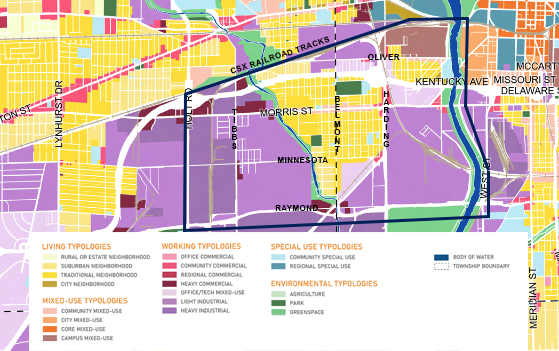
Comprehensive Plan: Land Use Map from PlanIndy Portal, with West Indy boundaries added.
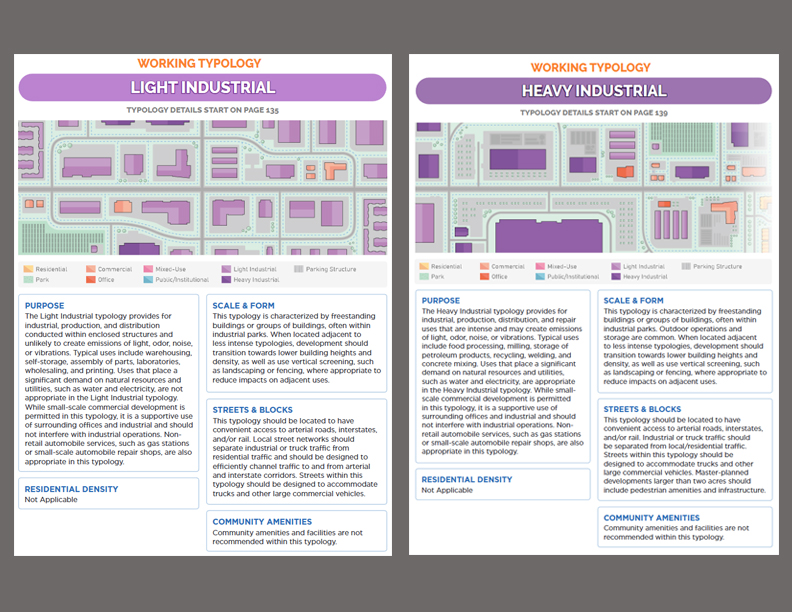
Marion County Pattern Book 2026 Draft Land Use Typology Definitions – Industrial p. 51-52
DOWNTOWN EXPANSION INTO WEST INDY
March 3, 2026
In December, Department of Metropolitan Development (DMD) approved a plan to expand the downtown regional center to the corner of Morris and Belmont. The plan will now to go City Council for a vote, but still no word on exactly when that vote would be. Adoption is expected 3rd Quarter of 2026.
Representatives from the Department of Metropolitan Department (DMD) came to our February meeting to give us some detail on what a downtown regional center expansion would mean for our neighborhood. City Councilors Jared Evans (jared.evans@indy.gov) and Kristin Jones (kristin.jones@indy.gov) were also invited to talk with our community at the meeting, but did not respond to invitations and did not attend.
Properties within the boundary go through a different review process, and setback from the road requirements are much more narrow, but DMD rep Jeff York said that it is unlikely that any homes would be taken out of the neighborhood under the expansion. He said variance petition increases would probably be smaller here in West Indy as compared to those expected on the North and East portions of the boundary.
WINC membership asked about resident representation at meetings concerning the expansion. York stated that representatives from the neighborhood should be contacted with opportunities to provide input. There is supposed to be one more pubic meeting this Spring. If you are interested in being a neighborhood representative, please reach out to us at winc@westindy.org or to our Mayor’s Neighborhood Advocate, Ana Santiago at Ana.SantiagoBaeza@indy.gov.
You can watch this video to get a little more information, and view the presentation given at the meeting here.
January 22, 2026
Last month, Department of Metropolitan Development (DMD) approved a plan to expand the downtown regional center to the corner of Morris and Belmont. The plan will now to go City Council for a vote.
Representatives from the Department of Metropolitan Department (DMD) will be at our February meeting to give us some detail on what a downtown expansion means for our neighborhood. In the meantime, you can watch this video to get a little more information and form your questions.
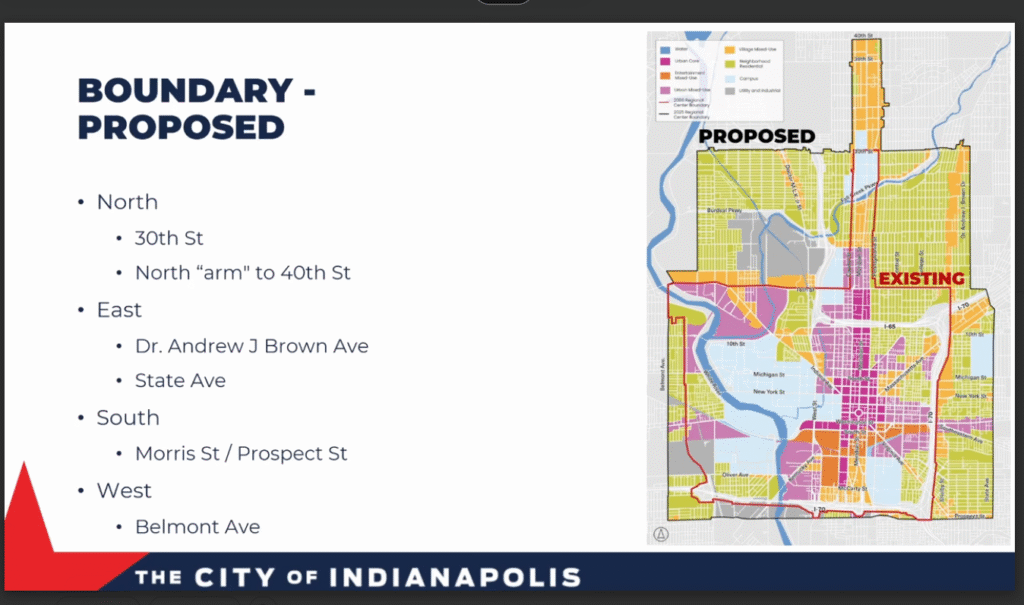
Screenshot of proposed expanded downtown boundaries from DMD video.
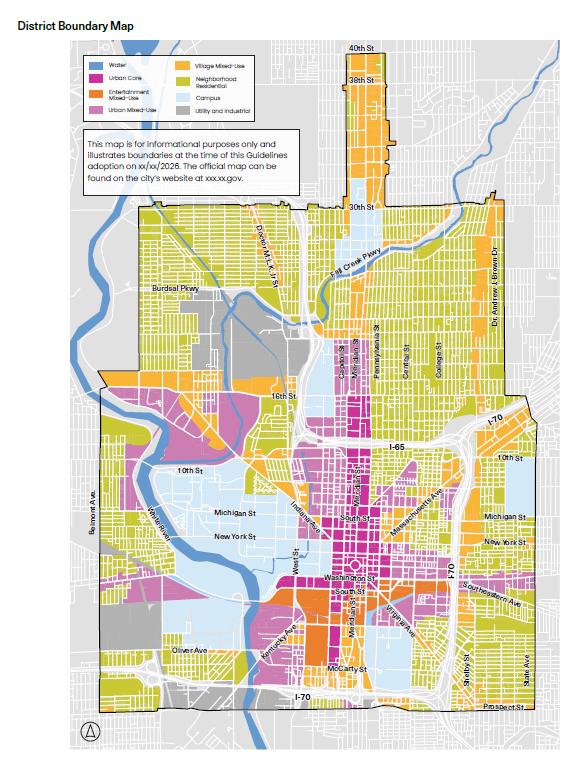
Land Uses from Expansion Guideline Draft
The Land Use Plan is important because it outlines what purposes a given area of land in our neighborhood can be used for. For example, looking around West Indy, you can see examples of residential use (our homes), community spaces (our parks), commercial (restaurants and stores), and industry (factories and trucking).
To get a better understanding of what a Land Use Plan is, why it’s important, and how the process works, check out this series of short videos by the People’s Planning Academy (PPA) from Indianapolis Neighborhood Resource Center (INRC) and DMD.
You can read the most current West Indy Land Use Plan (2011) here. The West Indy Land Use Plan is part of the City’s overall Comprehensive Plan for Indianapolis and Marion County. The Pattern Book gives explanations of different types of neighborhood uses.

DMD’s draft of the Comprehensive Plan is expected in early 2024, and adoption is expected by the end of 2024.
Keep an eye out for opportunities to make your voice heard during this important process! If you would like to be on WINC’s Land Use Committee, please contact us at winc@westindy.org.